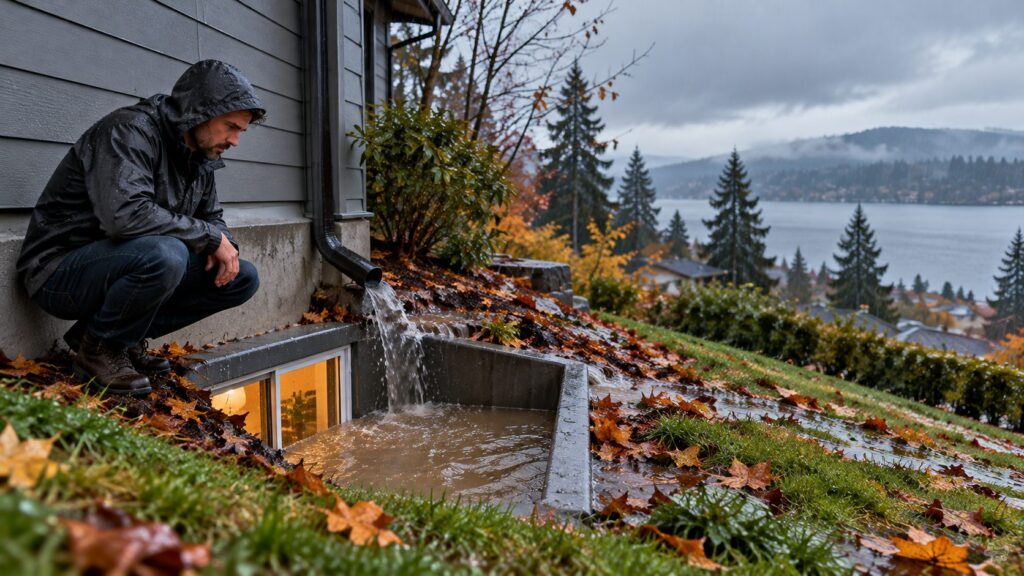
Every fall, the Eastside gets the same warning signs. The first atmospheric river rolls in off the Pacific, rain falls for days, and creeks that looked harmless in August start running high and brown. For homeowners near Kelsey Creek, Mercer Slough or Juanita Creek, that’s when the question comes up: are we covered if water gets in? For most households, the honest answer is no, not unless they bought separate flood insurance coverage ahead of time. Here’s why timing matters so much and why it pays to get flood insurance before winter rather than after the first big storm.
Why Fall and Winter Bring Flood Risk to the Eastside
Western Washington gets most of its rain between October and March, and the heaviest events usually come from atmospheric rivers. These long plumes of tropical moisture can drop several inches of rain in a day or two, often on ground that’s already soaked. On the Eastside, that water has to go somewhere. Some of the spots that see trouble most often include:
- Low lying areas along Kelsey Creek in Bellevue, where the creek can rise quickly during long storms
- Neighborhoods near Mercer Slough, where high water collects in flat, marshy ground
- Homes along Juanita Creek in Kirkland, especially close to Juanita Bay
- Basements and daylight lower levels on sloped lots, where runoff from uphill streets and yards finds its way in
You don’t need to live on a mapped floodplain to get water damage. Many Eastside claims come from runoff, saturated soil and overwhelmed drainage on hillsides, not from rivers overflowing their banks. If you’ve ever watched water sheet across your yard during a November storm, take that as your sign to look into flood insurance before winter settles in for good.
Your Home Policy Almost Certainly Excludes Flood
This surprises a lot of homeowners. A standard homeowners policy covers plenty of water problems, like a burst pipe or a leaking water heater, but it excludes damage from surface water and flooding. If rain runs downhill into your basement, a regular policy usually won’t pay for it. That gap is why we walk every client through it when reviewing coverage. Our Bellevue home insurance guide explains what a standard policy does and doesn’t include, and flood is one of the biggest exclusions on the list.

The 30 Day Waiting Period Is the Real Deadline
Here’s the detail that catches people off guard. Policies through the National Flood Insurance Program generally carry a 30 day waiting period before coverage starts. There are a few exceptions, such as when a policy is required as part of closing on a mortgage, but for most homeowners, a policy bought today won’t protect you for about a month. That’s why buying flood insurance before winter matters so much. If you wait until the forecast shows an atmospheric river headed for Puget Sound, it’s already too late for that storm and possibly the next one. The best window is September through November, before the wettest stretch of the season begins. Some private flood insurers offer shorter waiting periods or higher limits, which can make sense for higher value Eastside homes. An independent agent can compare both options side by side. If you’re shopping for flood insurance before winter on a tight timeline, ask about the waiting period on every quote you compare.
What Flood Insurance Covers
NFIP policies split coverage into two parts:
- Building coverage, up to $250,000, for the structure, foundation, electrical and plumbing systems, furnace, water heater and built in appliances
- Contents coverage, up to $100,000, for furniture, clothing, electronics and other belongings
Basements have special limits. Flood policies cover essentials in a basement, like the furnace, water heater and electrical panel, but generally don’t cover finished walls, flooring or most personal belongings stored down there. That’s an important detail for homes on sloped lots where the lower level is a bedroom or family room. FEMA’s flood insurance overview explains how the program works, and the Washington Office of the Insurance Commissioner has helpful guidance for state homeowners as well.
Who Should Seriously Consider Coverage
Flood insurance before winter isn’t only for homes in high risk zones. It’s worth a close look if you:
- Live near Kelsey Creek, Mercer Slough, Juanita Creek or another stream or wetland
- Have a basement or daylight lower level, especially on a hillside
- Have had water in your crawlspace or garage during past storms
- Live downhill from a busy street or large paved area
- Have a mortgage but no flood requirement and assume that means low risk
Properties outside high risk zones often qualify for lower premiums, which makes coverage more affordable than many people expect.
Simple Steps to Reduce Water Damage
Flood insurance before winter is your financial backstop, but a few maintenance steps help keep water out of your home in the first place:
- Clean gutters and downspouts once the leaves are down
- Extend downspouts several feet away from your foundation
- Clear storm drains near your driveway before big storms
- Test your sump pump if you have one
- Grade soil and mulch so it slopes away from the house, not toward it
- Move valuables and documents out of the basement or onto shelves
Talk With a Local Agent Before the Storms Arrive
Kimball Agency has helped Eastside families protect their homes for years, and we know which neighborhoods tend to see water every winter. We can review your current homeowners policy, explain what’s missing and quote NFIP and private flood options so you can choose with confidence. Kirkland homeowners can learn more about our insurance in Kirkland as well. Getting flood insurance before winter is one of the simplest ways to protect your home and savings. You can visit our Bellevue office on 140th Avenue NE or reach out for a quote while there’s still time for coverage to take effect.
Frequently Asked Questions
Does homeowners insurance cover flooding in Washington?
No. Standard homeowners policies exclude flood damage from surface water and rising water. You need a separate flood policy through the NFIP or a private insurer.
How long does it take for flood insurance to start?
NFIP policies usually have a 30 day waiting period before coverage begins. Some private flood policies have shorter waiting periods, so it’s worth comparing options.
Do I need flood insurance if I’m not in a flood zone?
It’s worth considering. Many flood claims come from properties outside high risk zones, especially homes affected by runoff on sloped lots. Coverage outside high risk areas is often less expensive.
Does flood insurance cover my basement?
Partially. Flood policies cover essential equipment in a basement, like the furnace, water heater and electrical panel, but usually not finished walls, flooring or most stored belongings.
How much does flood insurance cost in Bellevue?
Cost depends on your home’s location, elevation, foundation type and coverage amount. Homes outside high risk zones often pay much less than homes near creeks or wetlands.
When is the best time to buy flood insurance?
Early fall is ideal. Buying flood insurance before winter, ideally in September or October, gives the waiting period time to pass before the heaviest atmospheric river storms arrive.